Zara Schwarz · 2 September 2026
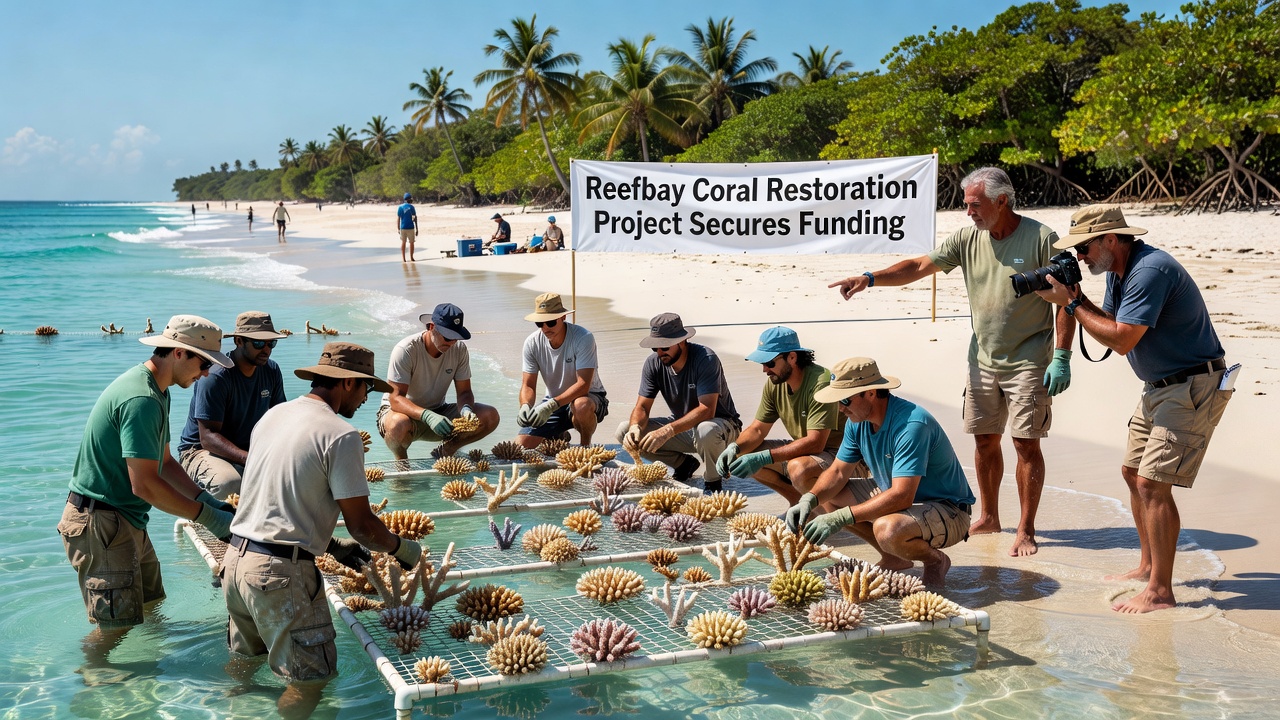
The Reefbay Marine Conservation Initiative has secured a $2.5 million grant to advance coral restoration across the area's degraded reef systems. The funding supports large-scale efforts to transplant resilient coral fragments and monitor recovery over the next three years.
Funding Allocation and Implementation Timeline
Allocated resources will cover specialized equipment, staff training, and partnerships with regional research institutions. Initial phases focus on site assessments in northern and southern reef zones, followed by nursery expansion and outplanting of 50,000 coral fragments. Quarterly monitoring will track growth rates and survival using underwater sensors and diver surveys. Project leaders emphasize collaboration with local fishers to minimize disruptions during active restoration periods.
Additional components include community workshops on reef stewardship and data sharing with international coral networks. The timeline targets full implementation by late 2026, with interim reports released every six months to ensure transparency and adaptive management.
Benefits for Reefbay Ecosystems and Local Communities
Restored reefs are expected to enhance biodiversity, stabilize coastlines against erosion, and support sustainable tourism and fisheries. Improved coral cover can increase fish populations by up to 30 percent within five years, benefiting local economies reliant on marine resources. The project also builds long-term resilience to warming waters by prioritizing heat-tolerant strains. Officials note that successful outcomes could serve as a model for similar initiatives in neighboring coastal regions facing comparable threats from climate change and pollution.
Overall, the investment underscores growing recognition of reefs as critical natural infrastructure. Ongoing evaluation will measure ecological gains alongside socioeconomic impacts to guide future conservation priorities.